Category: Eco-arts
-
Art & Environment Saturdays 2012 : Marine Biology in Castlerock
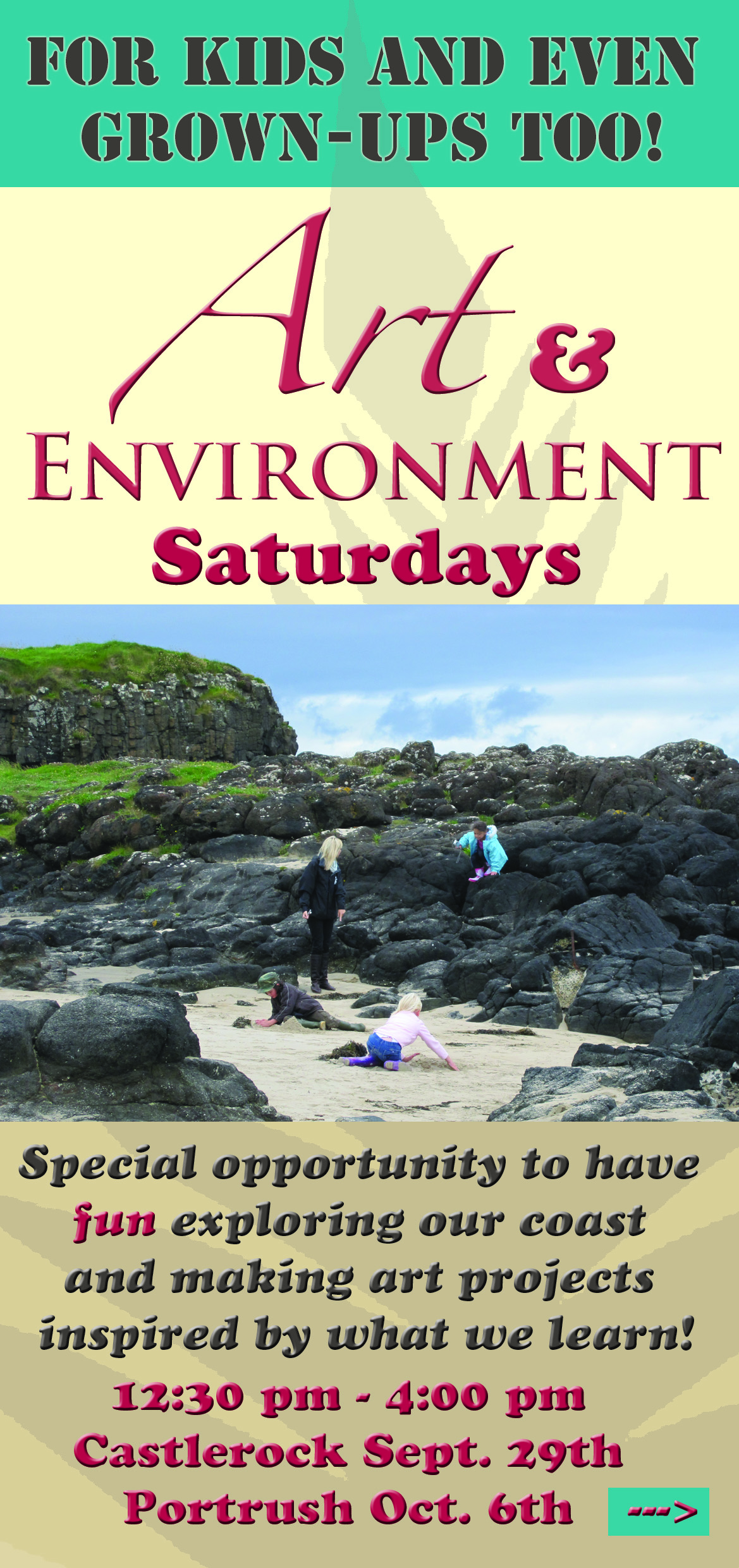
We had a wonderful afternoon on Saturday the 29th of September in Castlerock Northern Ireland with the kids participating the Art & Environment Marine Biology workshop. We were joined at low tide by Marine Biologist David Erwin and Maxime Siseret from the Causeway Coast and Glens Heritage Trust.

kids explore with Marine Biologist David Erwin at low tide on Castlerock Beach Northern Ireland during the Art & Environment class Saturday 
kids with biologist David Erwin on Castlerock beach during Saturday's art & environment workshop After an introductory chat about ocean life and familiarization with mollusks and other marine life frequently found in the nearby rock pools the kids were given digital cameras and launched into a scavenger hunt armed with laminated photo sheets of life forms and geological features of the North Coast beaches.

Marine Biologist David Erwin exploring with children from the Art & Environment workshop on the Castlerock Beach, Northern Ireland 
Using digital cameras in a beach scavenger hunt on Castlerock beach during the kids art & environment days 2012 David Erwin and artist McCall Gilfillan ( yes, me) kept the kids observation skills in high gear as they explored the rock pools and exposed intertidal zones on the west end of the strand. After making a circle through the dune system back towards Castlerock’s Main Street we looked together at our goal sheets to see how many of the 20 items we had documented.

kids with artwork based on environment exploration on Castlerock beach Northern Ireland
Then back to Christchurch Hall for snacks and a fantastic session of artistic interpretation using brilliantly coloured tissue and 1ft x 4ft sheets of laminated card to create big brilliant landscapes of intertidal zones and the lifeforms within them.Many many thanks to all the kids, parents, David Erwin, Maxime Siseret and Causeway Coast and Glens Heritage Trust who have sponsored this workshop series.
-
Art & Environment Saturdays : for kids and even grown-ups too!

Art & Environment Saturday workshops for kids. 29th of September 2012 Marine Biolody day in Castlerock, and 6th of October 2012 Geology day in Portrush, Northern Ireland 
These are indoor / ourdoor workshops so be dressed for exploring on the beach environment and getting messy with art materials! -
Kids classes in traditional paper-making
I am now 3 weeks in to a paper-making course with some of the P3, P4, and P5 kids from Ballyhackett Primary school and we are all having great fun, just have a look!


The kids know all the equipment they need and how to set out their tables to be ready to work. Mostly they work in pairs taking turns drawing out each sheet of paper, turning them onto the couching cloths and then absorbing excess moisture with a sponge before removing the mold.


This week the kids coordinated with their partners as they choose what colour paper they made. After making a couple of sheets with recycled shredded office paper and coloured napkins, they started to add textures to their vats from an assortment of things I brought along. The glittery stars were very popular. We also had wool, dryer lint, dried artichoke fibre. The children experimented with the materials and saw how they effected the texture of each sheet as they drew sheets from the vat.


Paper-making is such a tactile process and changing the makeup of the vat after each sheet allows the kids to get a feel for what textures they like as well as observing the changes in colour and thickness of the sheets as the makeup of the vat changes. A further stage is learning how much pulp to add after each sheet is drawn to maintain a desired consistency, and then documenting favourite recipes by proportion so they can be repeated.


-
Kiln Cast Glass
These open cast glass platters came out of a series of experiments with kiln casting on sand. I wanted to use recycled glass to create my own forms inspired by some of my treasures from beach combing. So with sea-glass and tiny shells in mind I started testing combinations of silica sands as a casting bed. I wanted a mixture that would hold fine detail of actual seashells pressed into the sand yet wouldn’t stick to the glass when molten.


After extensive experimentation I found a blend of particle sizes that would work. The detail in the platter rims is created by shells from my beach gently impressed into the sand bed with tweezers and then removed. The sheets of glass are then slumped at casting temperatures over fibre molds I created then embedded into the sand bed inside the kiln. The glass picks up some texture from the sand as well giving a very marine feel to the piece.

The bands of colour are created with coloured glass gravel and sands sieved over the main sheets of glass that create the body of the piece. I made delicate thrown porcelain cups reminiscent of the limpets and cockles cast into the rims which can be used for serving nibbles or sauces. The sets are made to be used as well as admired, food served on the long thin platters looks very sophisticated, and the more portrait proportioned pieces can be used as individual plates as well as serving pieces.


-
Pit-firing
These images show some of my favourite pit-fired pieces which I have kept in my own collection. Pit-firing is a wonderful process for me because it is deeply connected to my environment and the seasons. The process starts with gathering materials for the combustible nest which fumes each vessel. I walk the beach to harvest the right seaweed and visit some of the family farms to get the cow dung that insulates the pieces and slows their cooling as the fire dies out. Other materials are gathered from my garden and the hills around the studio.


All the colour in the surfaces comes from the materials burned around each piece and how it is nestled in the flames. The pieces themselves are generally wheel thrown porcelain, burnished when leather-hard then low fired to retain enough porosity to absorb the fumes released by the organic materials in their ‘nest’. After firing I seal the surfaces with a smooth wax which highlights the satin burnishing and stops the oil from finger prints from marking the surface.


Some of the surfaces I inscribe with text using a razor at the leather-hard stage prior to the first firing. The texts I use are lines from poems, books, or songs that have shaped my understanding of life in some way. I think of the words as being scared into the surfaces, they become an integral part of the vessel, inviting touch for discovery as fingertips trace the letters to understand the phrases.


The markings on each piece are unique, a fusion of shape, materials, and process. The flame fuming of the pit-fire works in harmony with the round shapes of these vessels. The flames are able to lick the shape with out sharp lines breaking their flow. The result is a visually engaging surface with a strong tactile quality which I find a particularly satisfying combination in an art object.
-
Papermaking
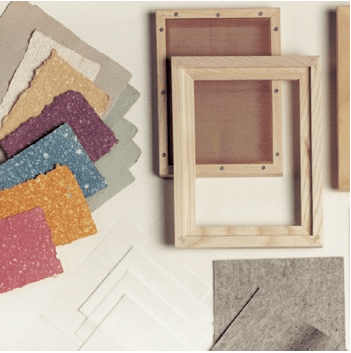
Tomorrow I start a paper-making course at my son’s school. It has been a little while since I have taught it so I am giving myself a little refresher tonight. I went through all my mold and deckle sets and tightened up the mesh on the small molds. I checked the blenders to see that they still run after being in storage, and found lots of squeezys of paper pulp fro previous sessions to help us start off. The school is in its final year of application for the green flag eco-schools credenitals. We will be recycling the shredded paper from the office (with colourful additions of course) then I plan to move on to incorporating vegetable matter. I find banana skins and broccoli stocks work nicely but anything fibrous can be used, artichoke hearts are beautiful, but rather a lot of work to prepare. Looking forward to working with the kids and getting my hands in lovely paper pulp.